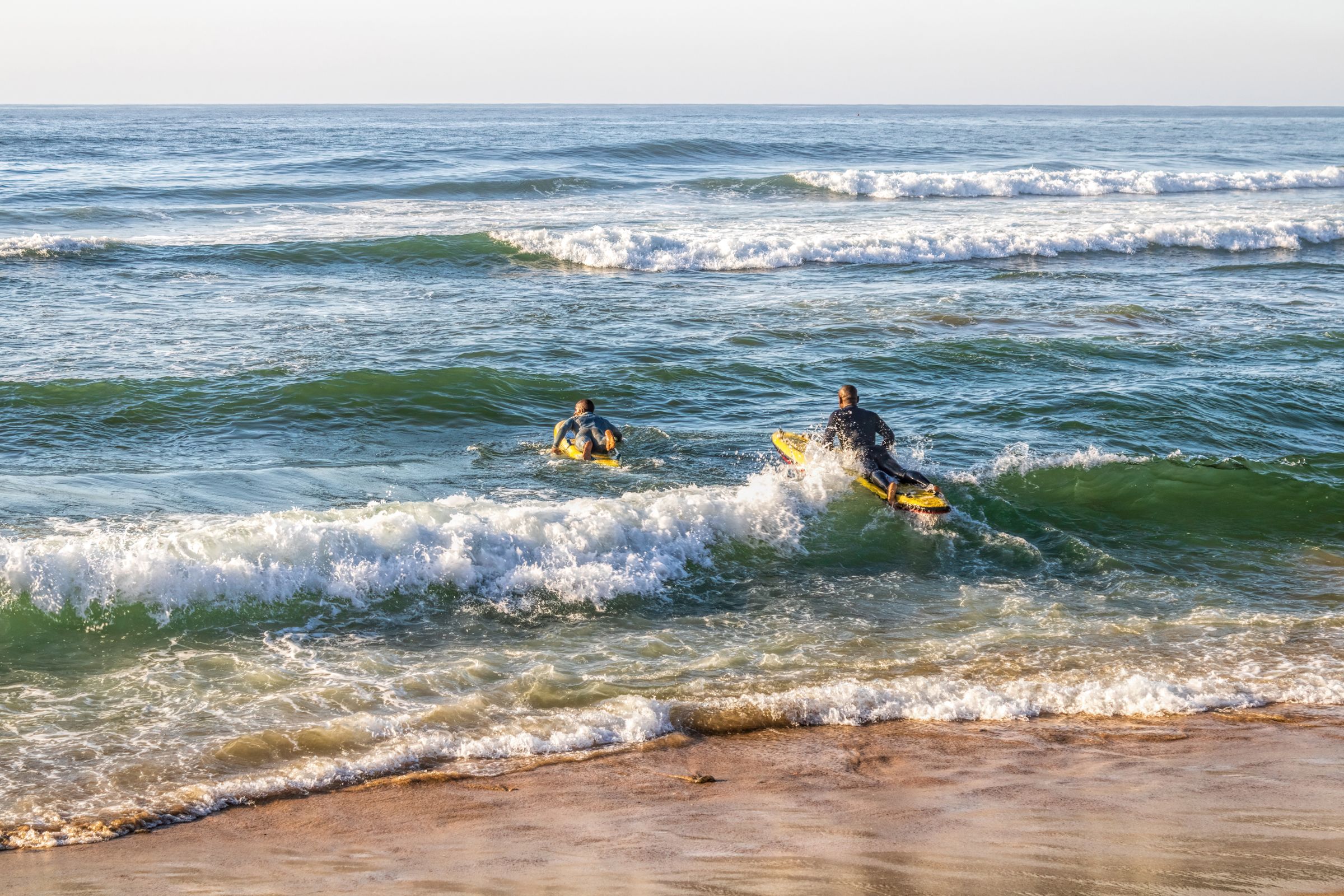
UAE beach season opens as visitor numbers climb
Safety experts urge preparation as crowds return to the UAE coastline
Beach season is back across the seven emirates, and with it a surge of visitors to destinations from Dubai’s Jumeirah and Kite Beach to Abu Dhabi’s Saadiyat Beach and Ras Al Khaimah’s Al Hamra Beach, alongside quieter spots such as Dibba “Secret” Beach in Fujairah. As the UAE’s cooler season draws residents back to the coast, water safety experts are urging families, particularly those with young children and weaker swimmers, to treat a day by the sea with the same preparation they would bring to any other planned activity.
Paul Stokes, founder and head coach at Ocean Warriors Lifesaving Club, says the starting point for any family outing is choosing where to swim. “I would hope that most families choose lifeguarded beaches, stay within designated swimming areas and follow the advice of the lifeguards,” he says. In his view, safety is not about fear of the ocean but about understanding it, respecting it and knowing what to do if conditions change.
Not every beach in the UAE is monitored. While many of the busier beaches have lifeguards, coverage is not continuous everywhere. Beaches with lifeguards are typically monitored from sunrise to sunset, and designated night beaches are equipped with floodlights. That gap makes personal awareness all the more important, Stokes argues, beginning with the information boards and signs posted at each site.
“People should look for information boards and beach signs and actually read them,” he says. “They should check where the lifeguarded swimming areas are and understand what the red and yellow flags mean.” He also lists the hazards swimmers should account for: rips and currents, wave types, tides, weather, water temperature, marine life, prevailing winds, sun and heat exposure, and the type of beach itself.
The flag system is straightforward once learned. A green flag means conditions are safe for swimming; yellow calls for caution; red means do not enter the water; purple signals the potential presence of harmful marine life such as jellyfish; and red and yellow flags mark the designated, lifeguarded swimming areas.
Meanwhile, Daniel Wright, Learn to Swim manager at Hamilton Aquatics, stresses that reading the beach is only half the equation. The other half is an honest assessment of one’s own abilities and those of one’s children. “Beach safety is about knowing your child, knowing your own ability and understanding the environment you’re swimming in,” he says. “The sea is very different to a swimming pool, so before you get in, think about things like the depth, water temperature, waves and currents.”
On the question of supervision, the experts are unanimous. Constant, active adult supervision is the single most effective measure parents and carers can take. Wright points to the message of an Australian water safety campaign: “Watch me, not your phone.” It can take only seconds for a swimmer to get into difficulty, he notes, so putting the phone away and watching children in the water should be a top priority. Stokes echoes the point: “When your children are in or around the water, your eyes should always be on them and you should be actively engaged with what they are doing.”
Reliable national statistics on drownings are not centralised or published annually across all seven emirates, but figures from National Ambulance offer some indication of the risks. In 2021, the service responded to more than 194 drowning-related incidents at swimming pools and beaches across the Northern Emirates, with the most common risk factors including swimming when lifeguards were off duty and lapses in supervision.
Preparation extends beyond the water’s edge. Stokes recommends that children wear bright-coloured, high-visibility swimwear and rash vests, noting that orange and pink have been identified as the easiest colours to see in the water. He also advises families to agree on a plan and a checklist in advance, discussing “what if” scenarios: what happens if someone gets into difficulty, where the lifeguard is, what the flags mean and who would call for help.
Swimming ability itself remains the most vital safety skill for young children, and experts highlight the value of practising basics such as treading water and floating. Many swimming schools also teach “self-rescue”, in which children who cannot yet swim learn to stay afloat and wait for help, or reach a ledge to hold onto.
Recognising when someone is in trouble is another critical skill, and it runs against common intuition. Contrary to the popular image of a drowning person shouting and splashing, most drownings are quiet and fast, as the person expends all their energy keeping their head above water rather than calling for help. Wright offers parents a practical cue: watch for a child losing their footing or tiptoeing as the water deepens, with the waterline creeping towards the chin. That, he says, is the moment to step in.
Stokes outlines four types of swimmers who might get into difficulty. A non-swimmer may appear upright, facing the shore and making climbing-like movements with the arms. A weak swimmer may show ineffective strokes, head tilted back and sitting low in the water. An injured swimmer may wave or call for help while holding the affected part of the body, while an unconscious person may float face down with water washing over them.
If someone is seen struggling, Wright’s advice is clear: call for help and alert the lifeguards first. “Wanting to make a rescue is brave, but attempting a rescue without the right training can put you in serious danger, too,” he says. “A rescuer without training can very quickly become another casualty.” As the season stretches on through the cooler months, the question for every family heading to the shore is whether the checklist gets made before the towels do.
Q&A
What do the different beach flag colours mean in the UAE?
A green flag means conditions are safe for swimming; yellow calls for caution; red means do not enter the water; purple signals the potential presence of harmful marine life such as jellyfish; and red and yellow flags mark the designated, lifeguarded swimming areas.
How widespread is lifeguard coverage on UAE beaches?
Not every beach is monitored. Many busier beaches have lifeguards, but coverage is not continuous everywhere. Lifeguarded beaches are typically monitored from sunrise to sunset, and designated night beaches are equipped with floodlights.
What do the drowning-related incident figures show?
Reliable national statistics on drownings are not centralised or published annually across all seven emirates, but National Ambulance responded to more than 194 drowning-related incidents at swimming pools and beaches across the Northern Emirates in 2021, with common risk factors including swimming when lifeguards were off duty and lapses in supervision.
What should you do if you see someone struggling in the water?
Call for help and alert the lifeguards first. Experts warn that attempting a rescue without the right training can put you in serious danger, as an untrained rescuer can quickly become another casualty.