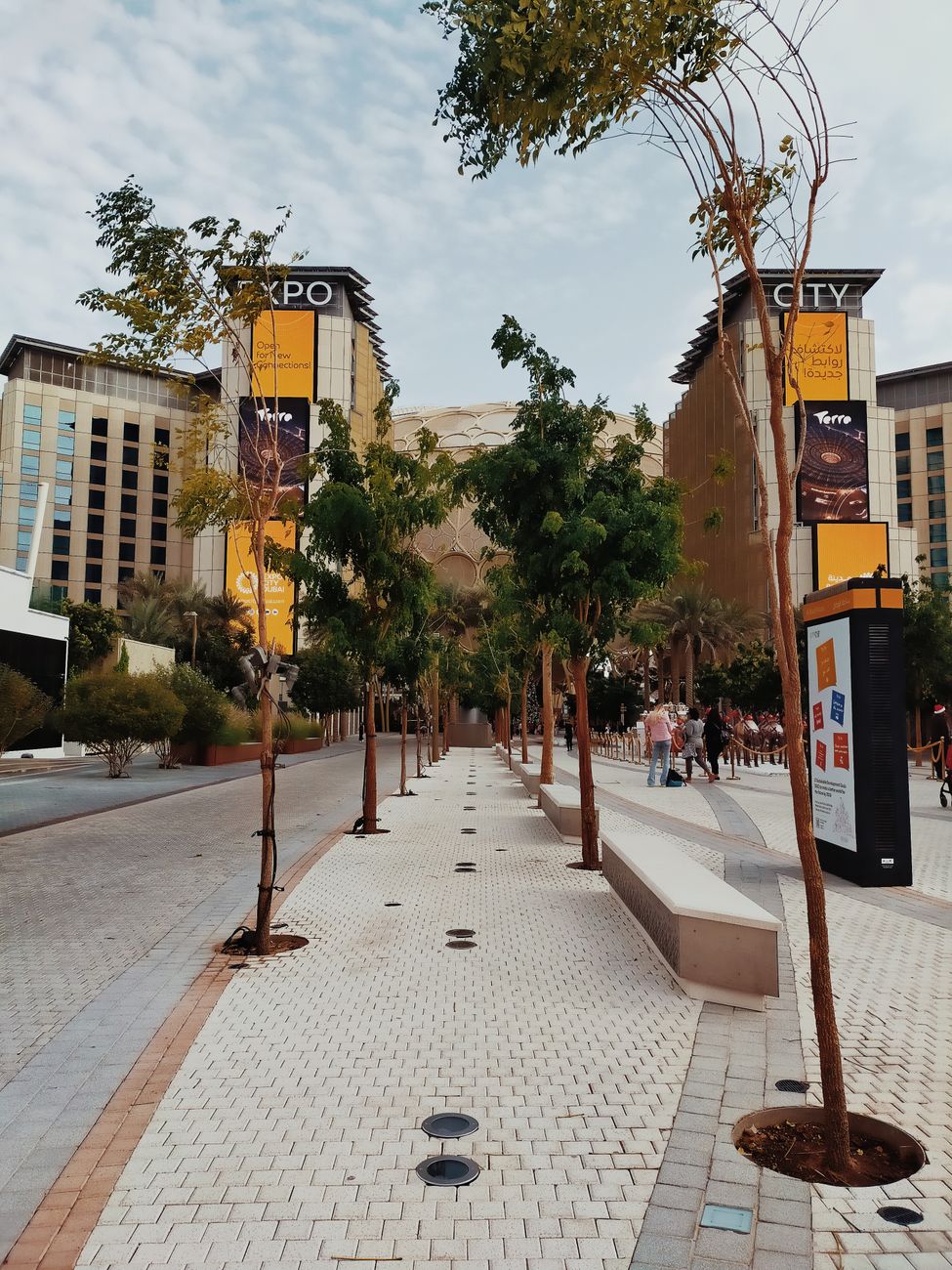
Expo City Dubai bets big on unproven smart-city returns
Data, governance and the economics of turning pilots into durable urban value
Expo City Dubai is treating its smart-city buildout as a capital investment whose returns are still unproven. The site, designed around connectivity, sustainability, accessibility and the 15-minute city, has been fitted with digital infrastructure comprising sensors, cameras and IoT devices across the city. That hardware generates a continuous stream of data on movement, energy and water consumption, security and other aspects of city operations, allowing operators to monitor what is happening across the city in real time. But Nadia Verjee, the city’s Executive Director, told Frontier Enterprise that deployment is only the starting point. The harder test, in her view, is whether the city can convert that data stream into solutions for real problems and accountable decisions.
That framing matters for anyone watching the economics of urban technology. A decade of smart-city projects has demonstrated that cities can deploy complex systems, Verjee said, but the more useful question is whether those technologies make cities work better. The starting point is shifting accordingly. Instead of asking what technology can be installed, cities increasingly ask what problem they are trying to solve, and what combination of data, infrastructure, governance and human judgement will solve it. The barriers, she argued, are often not technological at all. They arise where systems meet, in governance, institutional capacity, data quality, accountability, and increasingly in questions about where human judgement ends and machine intelligence begins. The language is moving from the “smart city” towards urban intelligence, with technology becoming part of a city’s operating system rather than an objective in itself.
Verjee described data, infrastructure and governance as a loop rather than separate layers. Data shows how a city is functioning; infrastructure responds and generates more of it; governance determines what information can be collected, connected and acted upon, and who remains accountable for the resulting decisions. The commercial risk is that advanced technology operates inside fragmented institutional systems. A city can hold enormous quantities of data and still lack intelligence. Trust runs through all three layers: people need confidence in how their data is used, institutions need confidence in its quality, and decision-makers need to understand both what the evidence shows and what it does not. Expo City Dubai’s Urban Framework applies this approach to measuring performance, using 131 metrics drawn from multiple sources to assess the health of a place through environmental, social and urban outcomes.
On the operational side, Verjee was blunt about the gap between experimentation and durable value. Cities are not short of pilot projects, she said. The difficult part is turning a successful experiment into something that can withstand procurement, regulation, budgets, political cycles and everyday use. She subjects innovation to three unsentimental tests: does it solve a real problem, does it measurably improve an outcome for people or the city, and can it be operated and governed over the long term. Living laboratories earn their keep here, because a real city reveals what a demonstration environment cannot: behaviour, maintenance, unintended consequences, competing priorities and cost. The purpose of experimentation, she said, is not to prove an idea works but to discover the conditions under which it works and whether those conditions apply elsewhere.
Meanwhile, the city’s artificial intelligence programme remains deliberately early-stage, and Verjee framed it as an exercise in organisational learning before any influence on live urban systems. The starting point is not where AI can be used but what the city is trying to improve. For now, the most useful experiments concern how teams work rather than how the city runs. Testing across teams has surfaced three outcomes: AI improving quality or efficiency, AI changing the way people think, and AI introducing another layer of work disguised as productivity. All three have been observed. That matters because an organisation is a relatively safe place to learn; a failed workflow experiment might cost lost time, while the tolerance for error is very different once technology begins influencing live urban systems and people’s lives. The city is building familiarity, practical skills and judgement, including understanding the data and governance involved, where human oversight belongs, and when not to use AI. Knowing when not to use it, Verjee suggested, may become one of the more important AI skills.
Her clearest early lesson is that AI capability and AI readiness are not the same thing. A model may technically perform a task, but whether an organisation, let alone a city, has the data, permissions, cybersecurity, governance and human capability to deploy it responsibly is another question entirely. In the city’s own experiments, sometimes the technology can perform a task before the institutional infrastructure is ready to support it, sometimes AI saves a great deal of time, and sometimes a person can do the job faster. That friction is useful, she said, because it shows where genuine value sits. The UAE’s ambition adds momentum: the move towards agentic government services makes questions of infrastructure, talent, governance and institutional readiness increasingly practical rather than theoretical. Expo City Dubai also convenes other cities to compare what has worked, what has not, and what might apply elsewhere. The next stage of urban intelligence, Verjee argued, should not be a competition over who has deployed the most AI, but a question of where human and artificial intelligence produce better urban outcomes.
Q&A
What digital infrastructure has Expo City Dubai deployed?
Sensors, cameras and IoT devices across the city, generating continuous data on movement, energy and water consumption, security and other aspects of city operations, monitored in real time.
What does the Urban Framework measure?
It applies the data, infrastructure and governance approach to measuring performance, using 131 metrics drawn from multiple sources to assess the health of a place through environmental, social and urban outcomes.
What three tests does Verjee apply to innovation?
Whether it solves a real problem, whether it measurably improves an outcome for people or the city, and whether it can be operated and governed over the long term.
Why is the AI programme kept early-stage?
It is an exercise in organisational learning before any influence on live urban systems, because AI capability differs from AI readiness, which requires data, permissions, cybersecurity, governance and human capability, and tolerance for error is far lower in live systems.